
Drive#
Overview#
Using the traditional, layer 1 blockchain for data storage is widely known to be expensive and inefficient. Consequently, data for Dash Platform applications is stored in Drive, a layer 2 component that provides decentralized storage hosted by evonodes. As data changes over time, Drive maintains a record of the current state of each item to support easy retrieval using DAPI.
Details#
Drive Components#
There are a number of components working together to facilitate Drive’s overall functionality. These components are listed below along with a brief description of service they provide:
Platform chain (orders state transitions; creates and propagates blocks of state transitions)
Platform state machine (validates data against the Dash platform protocol; applies data to state and storage)
Platform state (represents current data)
Storage (persists the current state - identities, data contracts, documents, etc.)
GroveDB (authenticated hierarchical storage backend enabling cryptographic proofs returned via DAPI)
Data Update Process#
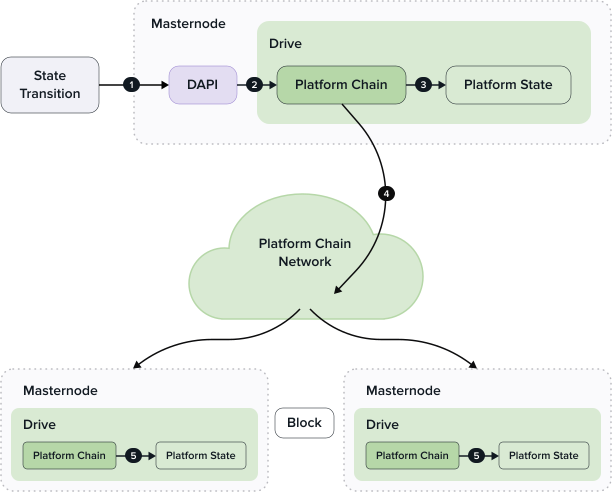
The process of adding or updating data in Drive consists of several steps to ensure data is validated, propagated, and stored properly. This description provides a simplified overview of the process:
State transitions are submitted to the platform via DAPI
DAPI relays state transitions to the platform chain’s consensus engine (Tenderdash), which asks the platform state machine to validate them and speculatively execute them when building or verifying a block proposal
The block is propagated and voted on by validators
Once the block is committed, each node finalizes it — persisting the speculative state changes to Drive, or executing the block if it was received via sync
Storing data in Drive#